 RAV4 Transmission Fluid Guide
Slipping, shuddering, dark fluid: 2012 RAV4 transmission symptoms and what a fluid change can (and can't) fix
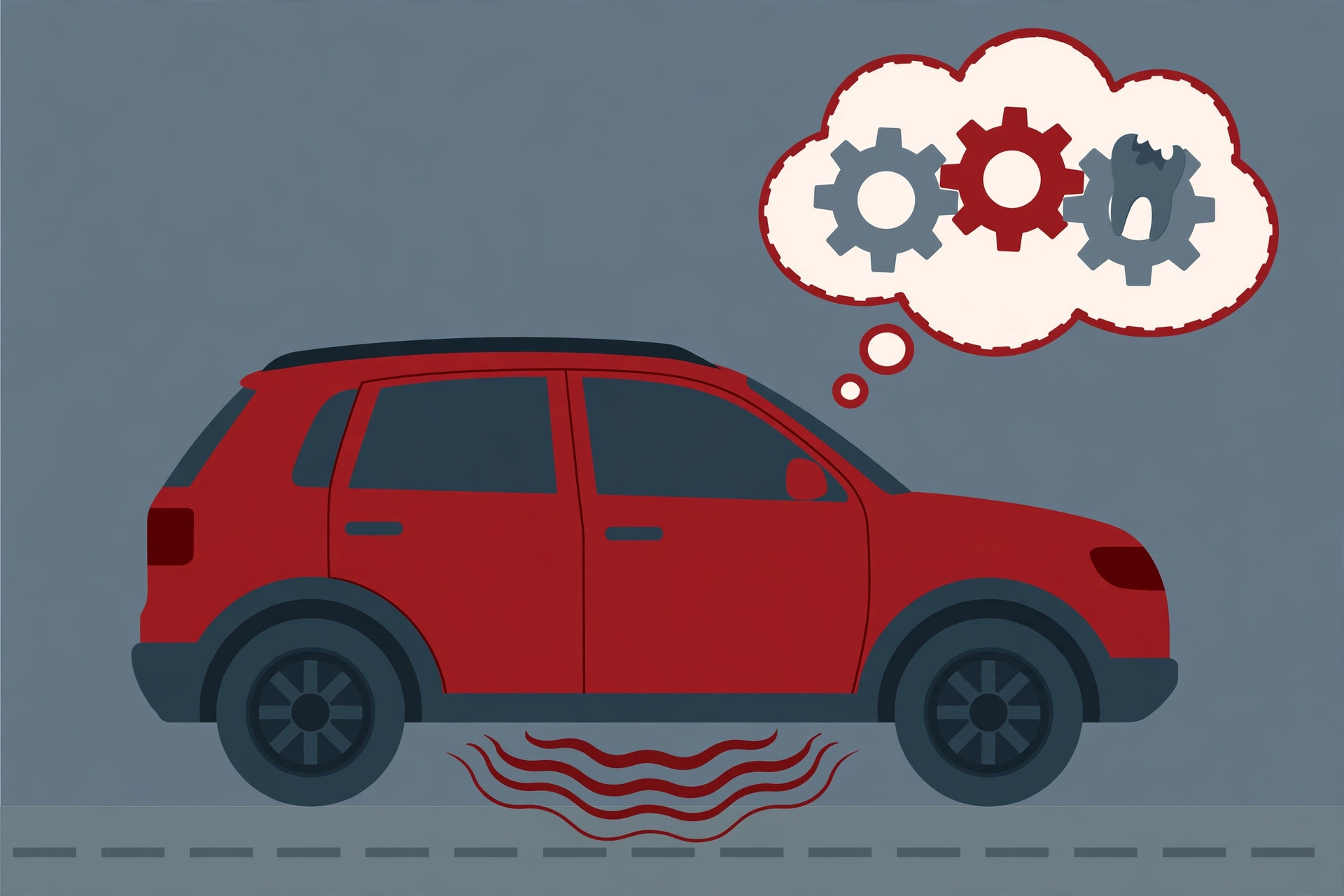
Almost everyone who searches for transmission symptoms is really asking one question: is this a fluid problem, or a transmission problem? The honest answer is "sometimes the first, sometimes the second, and the fluid itself is the cheapest diagnostic you own." A transmission that is low on fluid, or running on fluid whose friction modifiers are exhausted, can slip, flare, shudder, and shift harshly — and recover completely with a correct level and fresh ATF WS. A transmission with worn clutch packs, a failing solenoid, or damaged bearings will do many of the same things — and no fluid on earth will repair it. This guide works through the 2012 RAV4's common symptoms one at a time, in the order an owner should actually investigate them, with a straight verdict for each: fluid-plausible, fluid-first-then-see, or get a diagnosis.
⚠ Safety and sense: diagnosis involves checking hot fluid and, for some steps, working under the vehicle — jack stands on level ground, never a jack alone, gloves and eye protection. And a driving rule: a transmission that is slipping badly, won't engage, or is making grinding noises is not a "drive it and see" situation. Park it and have it towed to a shop; driving a failing transmission converts repairable faults into scrap.
Before any symptom: the two free checks
Whatever the complaint, start here, because low or exhausted fluid mimics half the failures in the book:
- Level. Vehicle level, engine idling, fluid fully warm (70–80 °C), lever cycled through the gears and back to Park, dipstick read in the HOT range. A transmission a quart low can flare between gears, hesitate into Drive, whine (the pump drawing air), and run hot — every one of which reads as "dying transmission" from the driver's seat.
- Condition. Colour, smell, and feel of the fluid on the dipstick, as in the intervals guide: dark red-brown is tired; near-black and burnt-smelling is spent; grit or glitter is evidence of mechanical wear, not just old fluid.
If the level is low, correct it with ATF WS only, then find the leak before you celebrate — pan gasket seepage, axle seals, and cooler lines are the usual suspects on a vehicle this age, and a leak ignored is a level that will be low again, along with everything that follows from that.
Symptom: shudder at light throttle, around town speeds
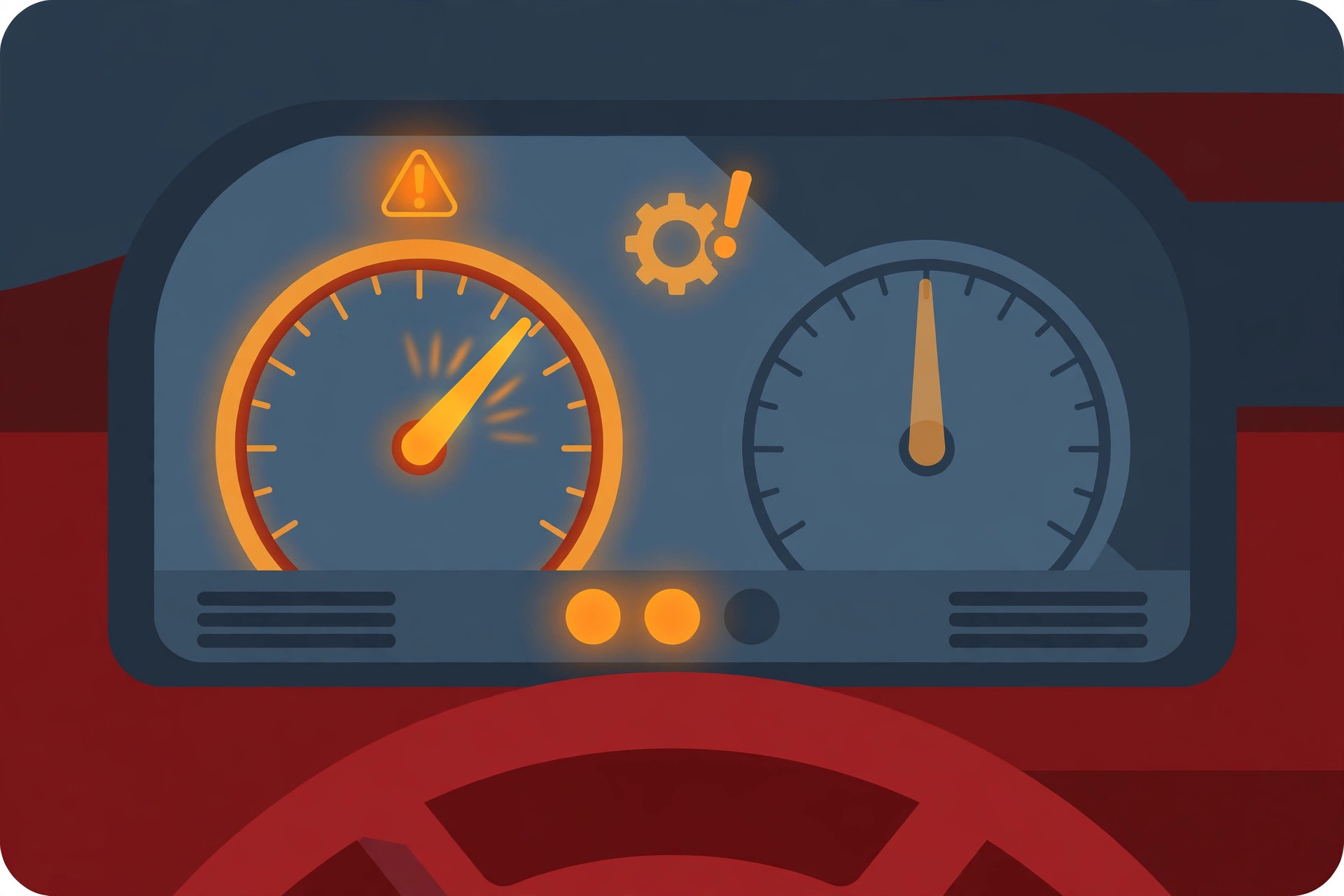
What it feels like: a vibration like driving over a short washboard or rumble strip, typically under light acceleration at moderate speeds, that stops when you lift off or accelerate harder. The usual mechanism: the torque converter's lock-up clutch engaging with fluid whose friction modifiers are depleted — the clutch alternately grabs and slips instead of applying smoothly. This is the symptom most famously sensitive to fluid condition, and precisely the behaviour Toyota's "use only ATF WS" notice is aimed at: the wrong fluid, or worn-out right fluid, produces it. Verdict: fluid-first. A drain-and-fill with genuine ATF WS (some owners need the second cycle to raise the fresh share) is the recognised first step, and when the cause is fluid, the improvement is often obvious within a short drive. If fresh, correct fluid at the correct level changes nothing, the lock-up clutch itself or its control solenoid moves up the list — that's diagnosis territory.
Symptom: slipping or flare — revs rise, speed doesn't
What it feels like: during a shift, or under load, engine rpm climbs without a matching increase in road speed; in flare, it happens briefly between gears, then the next gear catches with a thump. Fluid-plausible causes: a low level (pressure drops, clutches can't clamp), or fluid so degraded that clutch friction is inconsistent. Mechanical causes: genuinely worn clutch packs, low line pressure from internal leakage, or a failing pump — none of which fluid can restore. Verdict: fluid-first, expectations managed. Check the level before anything else; a surprising number of "slipping transmissions" are simply underfilled. If the level is right and the fluid is ancient, a drain-and-fill is a fair, cheap test. But understand the direction of evidence: if the drained fluid contains flakes or heavy debris, or slipping continues on fresh fluid, the transmission is worn — continuing to drive it hard will finish it. Budget for a specialist, not a second bottle of hope.
Symptom: harsh, late, or erratic shifts
What it feels like: shifts that arrive with a jolt, gears held too long, or an occasional confused downshift. The fluid angle: the valve body meters fluid through small passages and solenoid valves; contaminated or incorrect-viscosity fluid changes how those circuits behave, and Toyota explicitly warns that substitute fluids "may result in shift concerns." Level errors cut both ways here — an overfilled transmission foams its fluid and shifts erratically too, which is why the level check must be done hot, by the book, not by vibes. Verdict: check level (both directions), then fluid. If the vehicle recently had fluid service elsewhere, ask what went in; a RAV4 filled with universal fluid that shifts badly afterward is a known story with a known fix — drain-and-fill cycles with genuine WS to dilute the wrong fluid out. Persistent harshness on correct fluid and level points to solenoids or valve-body wear: diagnosis.
Symptom: delayed engagement into Drive or Reverse
What it feels like: you select Drive, and there's a pause — a second, then several — before the transmission takes up drive; sometimes worse when cold. Fluid-plausible causes: low level first (the pump needs a moment to build pressure), and thick, cold, degraded fluid on a winter morning contributing a brief, mild version. The line: a short delay when cold that disappears warm is worth monitoring; a delay that is long, growing, or present warm indicates internal leakage past seals or a pressure problem. Verdict: level check, then a short leash. Correct the level, note the behaviour precisely (cold or warm, how many seconds), and if it persists or worsens, that measurement is exactly what a transmission shop needs to hear.
Symptom: dark or burnt-smelling fluid — but it drives fine
What it means: the fluid has oxidised from heat and age; burnt smell specifically means it has been hot. A transmission that still shifts cleanly on spent fluid is not a paradox — it's a warning with time left on it. Verdict: service it, gently, and use the service as an inspection. Drain-and-fill, and read what comes out (the do's and don'ts cover reading fluid and magnets). If the fluid is merely dark, you have simply done overdue maintenance. If a pan drop reveals heavy debris, you've bought information cheaply. The mistake to avoid is the opposite one: deciding that because it drives fine, the fluid must be fine. Fluid condition is visible on the dipstick; believe it.
Symptom: whining or humming that follows engine speed
Fluid-plausible cause: a low level letting the pump draw air, or a strainer restricted enough to starve the pump — both produce a whine that tracks rpm. Mechanical causes: pump wear or bearing wear. Verdict: level and strainer first. If the level is correct and the whine persists, a pan drop to inspect the strainer is the logical next step before condemning bearings — a strainer is cheap; a transmission is not.
Symptom: leaks — red fluid on the driveway
What to know: fresh ATF is red; old ATF is red-brown; either way, transmission fluid under the front of a RAV4 is a level problem in progress. Common sources at this age: the pan gasket, the drain plug (especially after a service where the washer was reused — the fix is a new gasket and 47 N·m, per the parts guide), axle seals where the driveshafts exit, and the cooler lines and their connections, which Toyota's schedule specifically has inspected every 30,000 miles. Verdict: fluid can't fix a leak, but the leak explains the fluid symptoms. Clean the area, drive, and re-inspect to find the highest wet point; fix the source, then set the level correctly. Topping up forever is how a seal's small bill becomes a transmission's large one — low fluid overheats and wears everything it touches.
What a fluid change cannot fix — the honest list
- Worn or burnt clutch packs (slipping that persists on fresh fluid at the right level).
- Failed shift solenoids or a worn valve body (consistent harsh/missing shifts, often with fault codes).
- Bearing, gear, or pump damage (grinding, heavy debris in the pan, whine that survives level and strainer checks).
- A torque converter whose lock-up clutch is mechanically worn (shudder unchanged by genuine fresh WS).
- Any leak whose source is a seal or gasket — fluid is the victim there, not the cure.
Notice what that list implies about the "never change old fluid" folklore from the other direction: if a transmission fails shortly after a fluid change, the fluid almost never caused it — the change coincided with, and sometimes briefly unmasked, wear that was already there. The correct response to old fluid in a worn transmission is a gentler service and an inspection (drain-and-fill, pan drop — not a flush), not a lifetime embargo on maintenance.
A sensible order of operations
- Check the level and condition — hot, idling, by the book. Fix the level with ATF WS only.
- If fluid is old or wrong: drain-and-fill with genuine ATF WS; re-test over a real drive.
- If evidence suggests debris or the history is unknown: pan drop — clean pan, read the magnets, new strainer.
- If symptoms persist on fresh, correct fluid at the correct level: stop servicing and start diagnosing — codes, pressure tests, a transmission specialist. At that point every further fluid change is money spent avoiding information.
Fresh fluid is a legitimate first medicine for this transmission — the 2012 RAV4's dipstick and drain plug make it a cheap one — as long as it's prescribed for the symptoms it can actually treat.