 RAV4 Transmission Fluid Guide
Towing and hauling with a 2012 RAV4: protecting the transmission

1,500 lb or 3,500 lb: those are both real ratings attached to the 2012 RAV4, and the difference between them is not trim trivia, it is the transmission's cooling hardware. Capacity tables online quote both numbers, often without saying which RAV4 they describe, and one model-year listing caps the 2012 at 1,500 lb outright, with a gross vehicle weight rating of 4,430 lb. The number that applies to your vehicle depends on the engine under the hood and one factory package. Start there, before the trailer is hitched, because protecting the transmission starts with staying inside the rating your hardware actually carries.
⚠ Safety, read before you tow. Never exceed the lowest rating in your setup: the vehicle's rating, the hitch rating, or the trailer rating, whichever is smallest, is your limit. If the transmission's behaviour changes under load, slipping, delayed engagement, or a warning light, stop towing and let the vehicle cool rather than finishing the trip on a hot transmission. Confirm your specific vehicle's ratings in its owner's manual and on its labels before relying on any figure in a general guide, including this one.
Find your number: engine, package, and equipment
- V6 with the factory tow package: 3,500 lb. The package rating comes with the hardware that earns it: a transmission cooler, a heavy-duty radiator, and a fan coupling, alongside the V6 engine itself.
- Without the tow package: about 1,500 lb. That is the figure for the four-cylinder models and for a V6 without the package equipment. Owner reports for this generation agree on the split, and on the package having been offered only on the V6.
- A hitch rating is not a vehicle rating. An aftermarket hitch can carry a sticker far above 1,500 lb. The sticker describes the hitch. The vehicle's rating, set by its engine, cooling, and structure, is the one the transmission lives under.
This is a spec verification exercise, not a memory test. If you cannot document the tow package on your V6, by its equipment rather than by a seller's claim, plan around 1,500 lb. The cooler is the deciding hardware, and the next section shows how to verify it is actually fitted.
The tongue weight math, worked
Trailer weight is only half the load the vehicle feels. Tongue weight guidance for this vehicle is 9 to 11 percent of the trailer's weight, carried on the hitch and the rear suspension. Worked for both ratings:
- A 1,500 lb trailer: tongue weight of 135 to 165 lb.
- A 3,500 lb trailer: tongue weight of 315 to 385 lb.
Run that arithmetic before loading, not at the ramp. A trailer loaded nose-heavy past the top of the range, or tail-heavy below the bottom of it, is a handling problem the transmission cannot fix, and cargo inside the vehicle counts against its gross weight rating alongside the tongue weight.
What the tow package adds, and how to verify the cooler
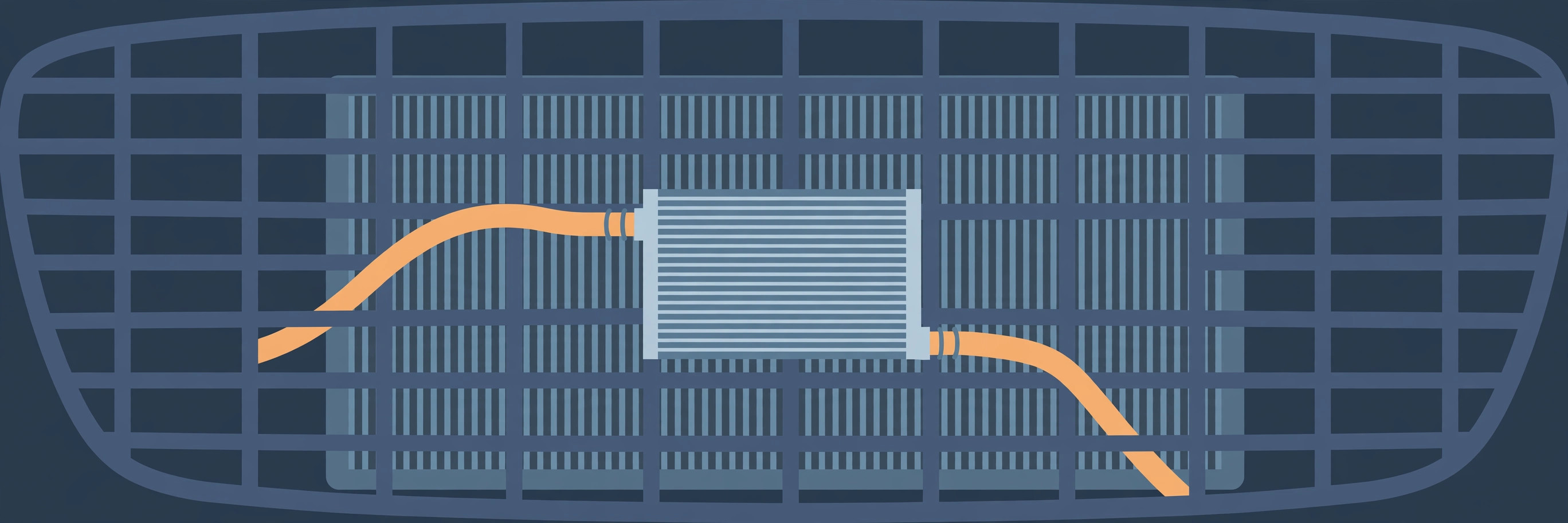
The package's transmission protection is the cooler: the automatic transmission fluid gives up its heat to the cooling system instead of carrying working temperature higher with every mile under load. Verifying fitment is a visual inspection, done cold, before any towing is planned:
- Trace the cooler lines. Follow the transmission cooler lines from the transmission toward the radiator, as laid out in the cooler lines and leaks guide. Lines running to the radiator's cooler confirm the circuit your fluid depends on while towing.
- Inspect every connection, crimp, and hose section on that route. A seeping crimp that is tolerable on a commute is a fluid loss running for hours under tow load. Any wet point found here is repaired before the trailer moves, not after the trip.
- Check the radiator and hoses as one system. The transmission cooler and the engine share the cooling hardware's health; a cooling system that is marginal solo is not ready to shed transmission heat as well.
Pre-tow transmission checks
- Check the fluid level and condition, hot, by the dipstick procedure in the fluid level and condition guide. Level in the HOT range, fluid red to light brown, no burnt smell: that is the pass. Dark fluid or a low level is a service first and a tow later.
- Confirm the service clock. Towing moves this vehicle onto Toyota's special operating conditions schedule: replace the transmission fluid every 60,000 miles or 72 months. If your fluid is near that interval, or its age is unknown, service before the towing season rather than after it.
- Inspect the cooler hoses and connections. Toyota's inspection rhythm for these is every 30,000 miles, checked for signs of leakage, and a pre-tow inspection is that check done at the moment it matters most.
- Do a short unloaded systems drive. Shifts should be timely and uneventful before a trailer amplifies every hesitation into heat.
What success looks like: a documented rating for your specific vehicle, tongue weight inside 9 to 11 percent, fluid at the correct hot level in good condition, and a dry cooler circuit. Four checks, all passable in a driveway, and together they are most of what "protecting the transmission" means in practice.
On the road, and after towing
Under load, the transmission works hardest at low road speed and on long grades, exactly where airflow and cooling are least generous. Drive the load you verified, not the load you hope for: steady speeds, generous following distance, and planned stops on long climbs rather than a single sustained pull. Any change in shift behaviour under load is information; the correct response is to stop, let the vehicle cool, and recheck the fluid level and condition before deciding whether the trip continues.
After a towing trip, repeat the two checks that cost nothing. Read the fluid again once the vehicle is back to normal use, level, colour, and smell, and look under the front for fresh wetness along the cooler circuit. Towing accelerates fluid ageing; that is precisely why the 60,000 mile or 72 month replacement interval exists for this use, while normal use stays inspection-led. A RAV4 that tows a few times a year and passes its post-tow checks has done the whole job: the right number, verified hardware, fluid serviced on the towing schedule, and evidence, gathered after every trip, that the transmission came through it unchanged.
— Owen Park, Automotive Writer